World
Senate politics, elite households, temples, slavery, and public spectacle coexist inside a Republic whose gods seem to bless every appetite that keeps the social order intact.
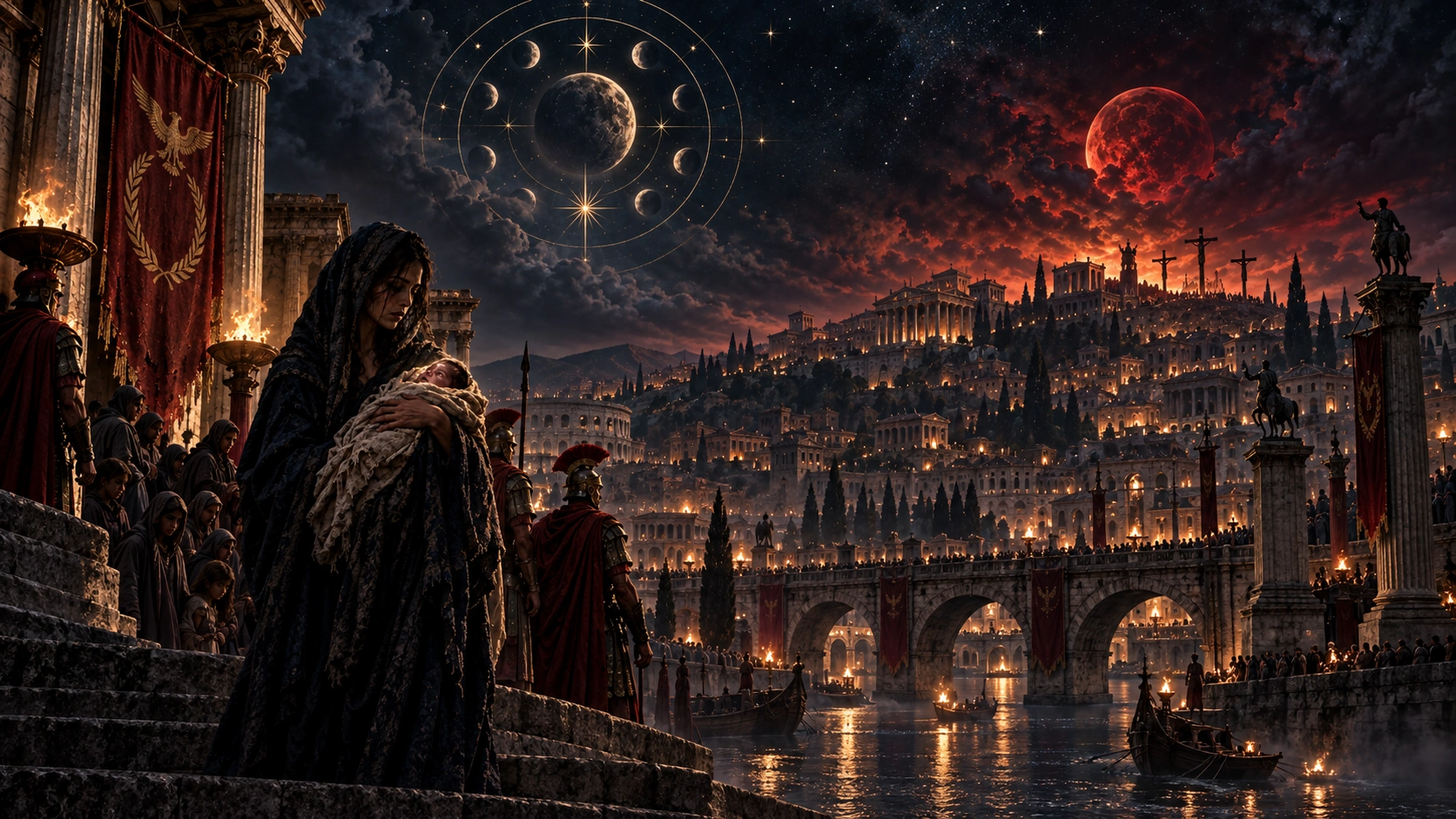
First novel · c. 1 CE · Aurelian Republic
The Republic calls itself civilized. When an elite slaveholder needs the people he owns to appear degraded by nature, he creates the shame himself—then plans to use the resulting child as proof that domination is necessary.
A manufactured scandal · a stolen truth · a living accusation
The horror and the miracle
Cassian needs a monster.
To defend Aurelia’s ruling order, he secretly engineers an enslaved mother and her own son into conceiving a child together. They do not know.
Cassian expects the pregnancy to prove what his society already believes: that corruption belongs to the people it owns.
Instead, the child is born healthy. Ordinary. Human.
The horror lies in what was done to create him. The miracle is that none of it defines what he is.
Hidden from the men who meant to turn his birth into evidence, Yasael grows into a man whose existence threatens the story an empire tells about itself.
When he returns, everyone wants to claim him: the Republic wants order; the oppressed want a liberator; believers want a saviour; history wants a symbol.
But Yasael’s existence carries a more dangerous possibility: origin can explain a life without owning it.
Senate politics, elite households, temples, slavery, and public spectacle coexist inside a Republic whose gods seem to bless every appetite that keeps the social order intact.
The man who manufactured the scandal can survive exposure only if the Republic keeps asking who owns Yasael instead of what was done to create him.
What if the sacred cannot be owned or named—yet people still need a human figure through which an invisible truth can become visible?