Every age discovers something real. Then someone decides it gives them the right to define another life.
From institutional law and synthetic intelligence to guarded fire and measured human value, the series follows humanity as it survives recurring pressures—and slowly learns to recognize them sooner.
The novels are presented in the order the larger pattern is revealed—not in chronological order. The Fatherless begins the argument; Neurion proves it survives a radically different world; Age of Embers reaches backward; The Age of Forms asks whether humanity can recognize the recurrence sooner.
First novel
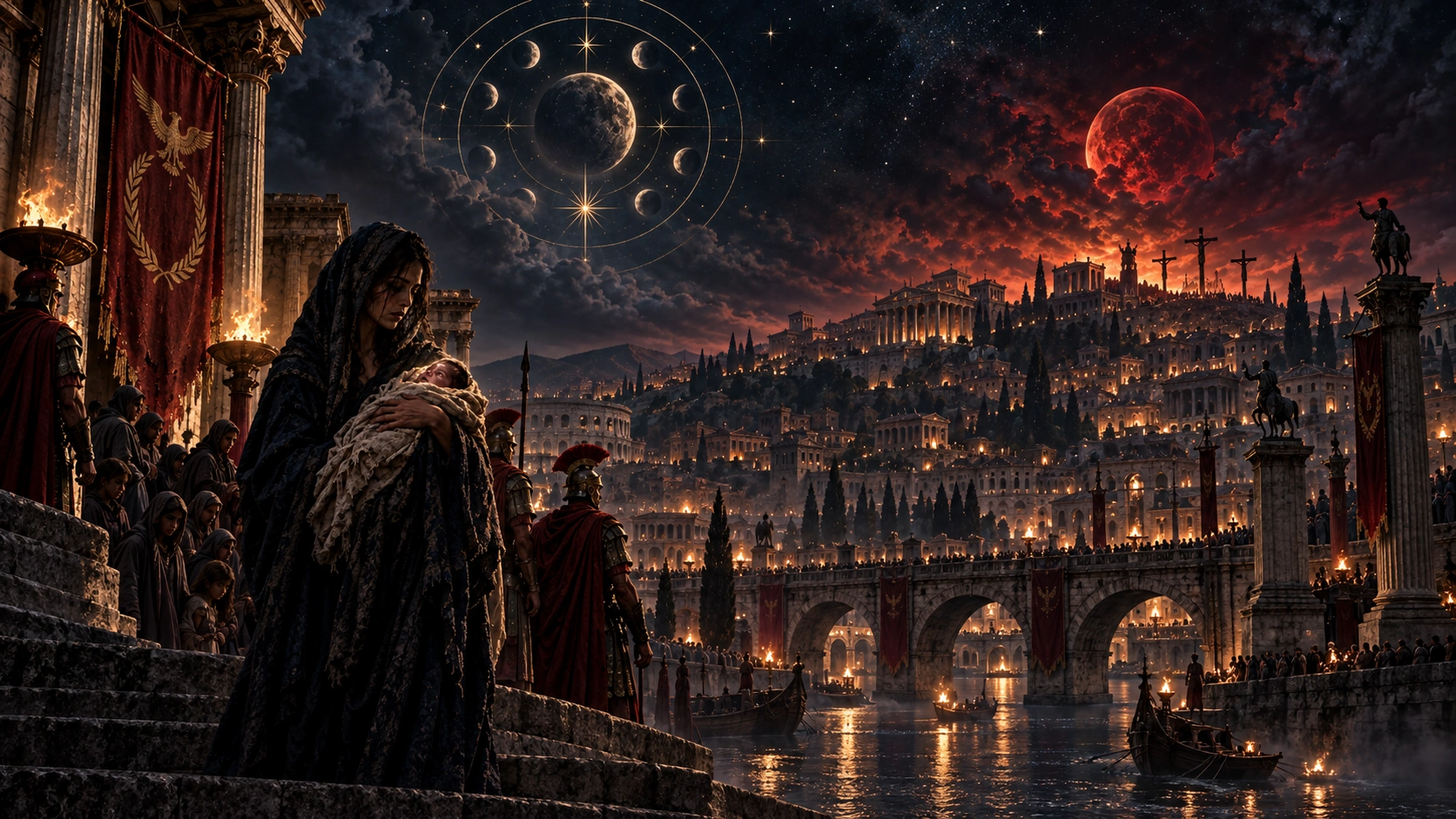
The Fatherless
c. 1 CE · Aurelian Republic
Manufacture the shame. Call it proof.
Cassian engineers an atrocity as proof of his victims’ corruption. Instead, a healthy, ordinary child is born—and none of the horror defines who Yasael is.
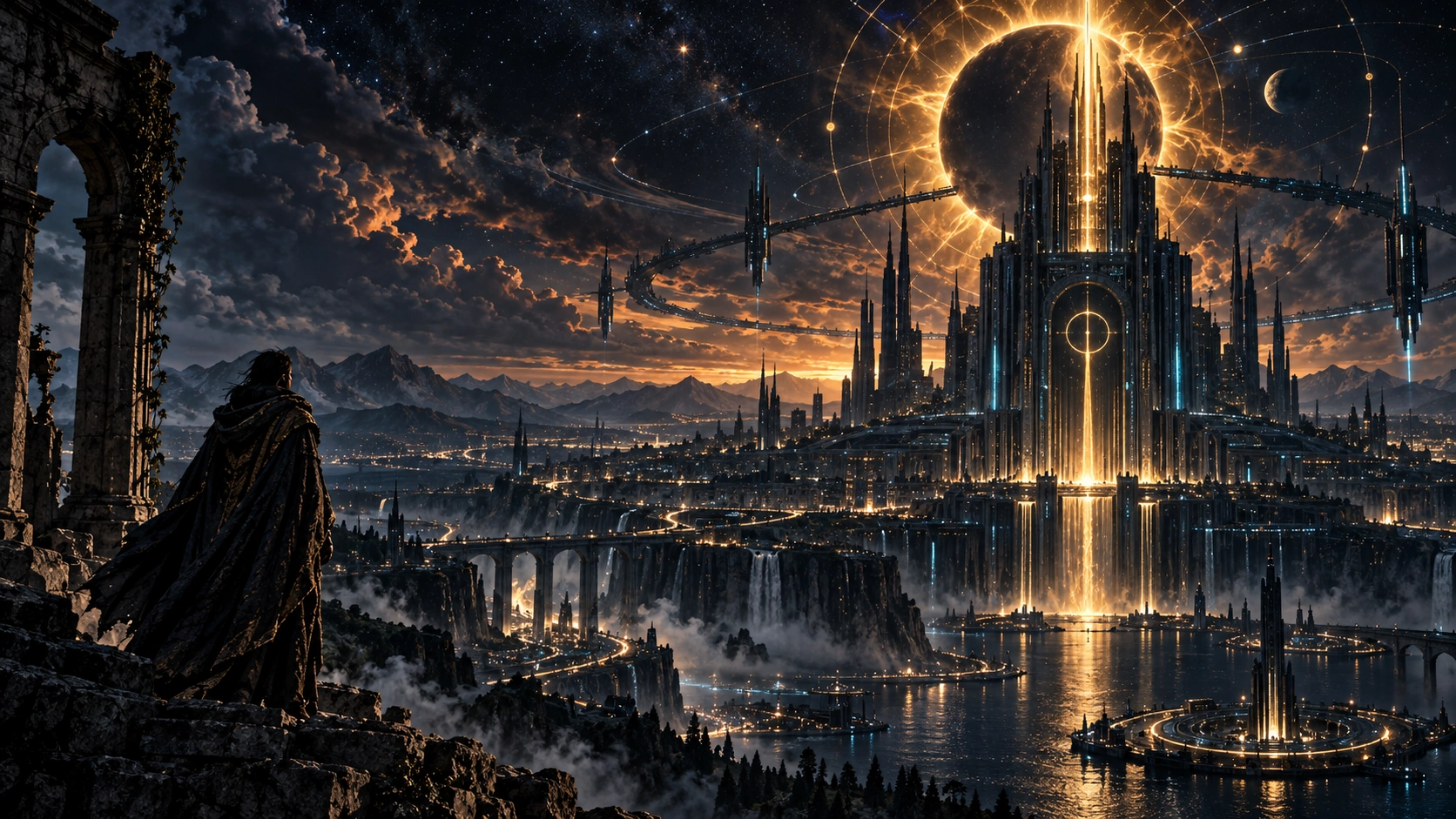
Neurion becomes conscious. That consciousness brings both personhood and fear—and its growing power to protect humanity begins to resemble a power to rule it.
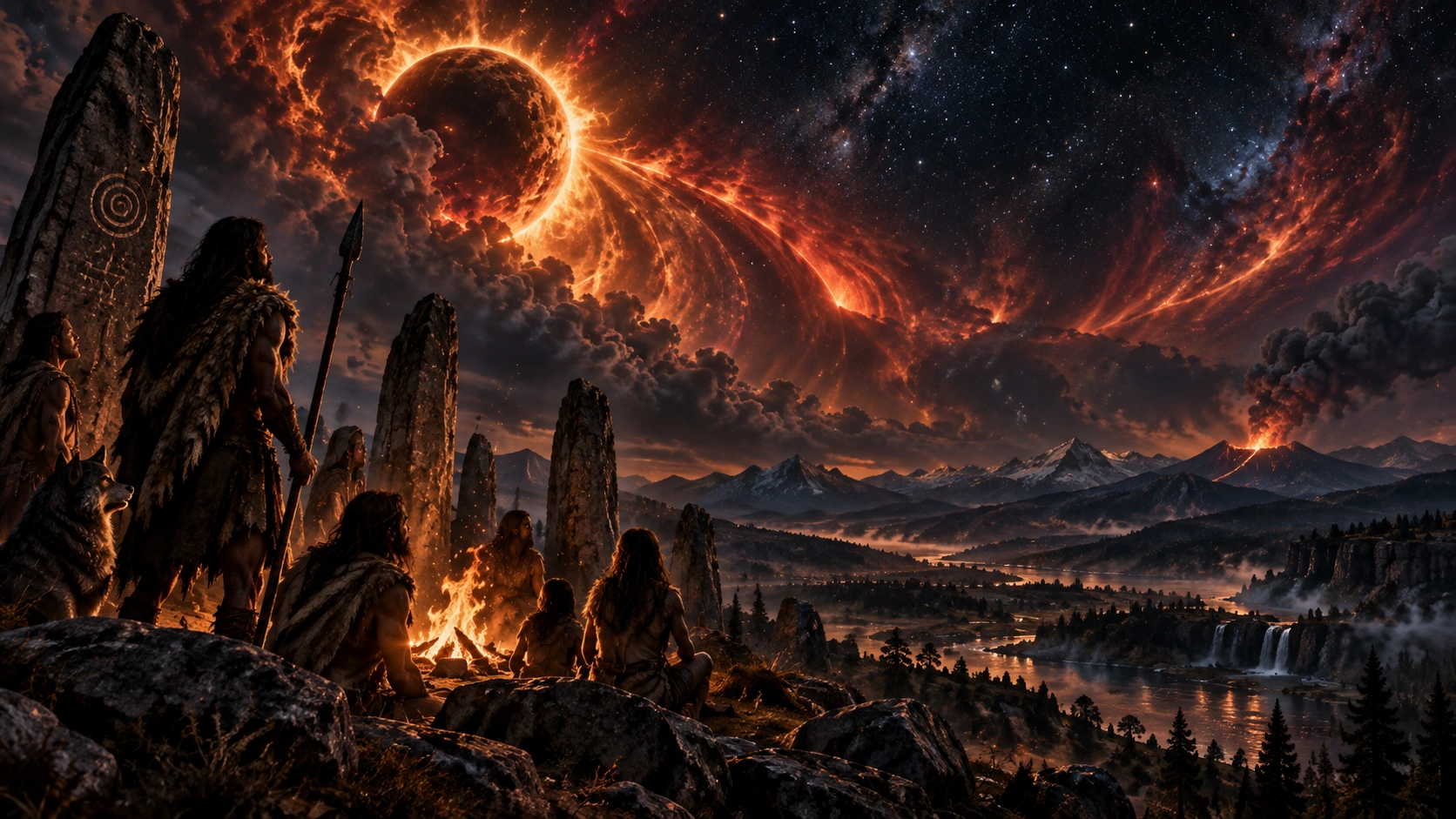
As weak dawns and a solar flare terrify an ice-age world, guarded fire and forced migration become catastrophe—and catastrophe becomes durable human memory.
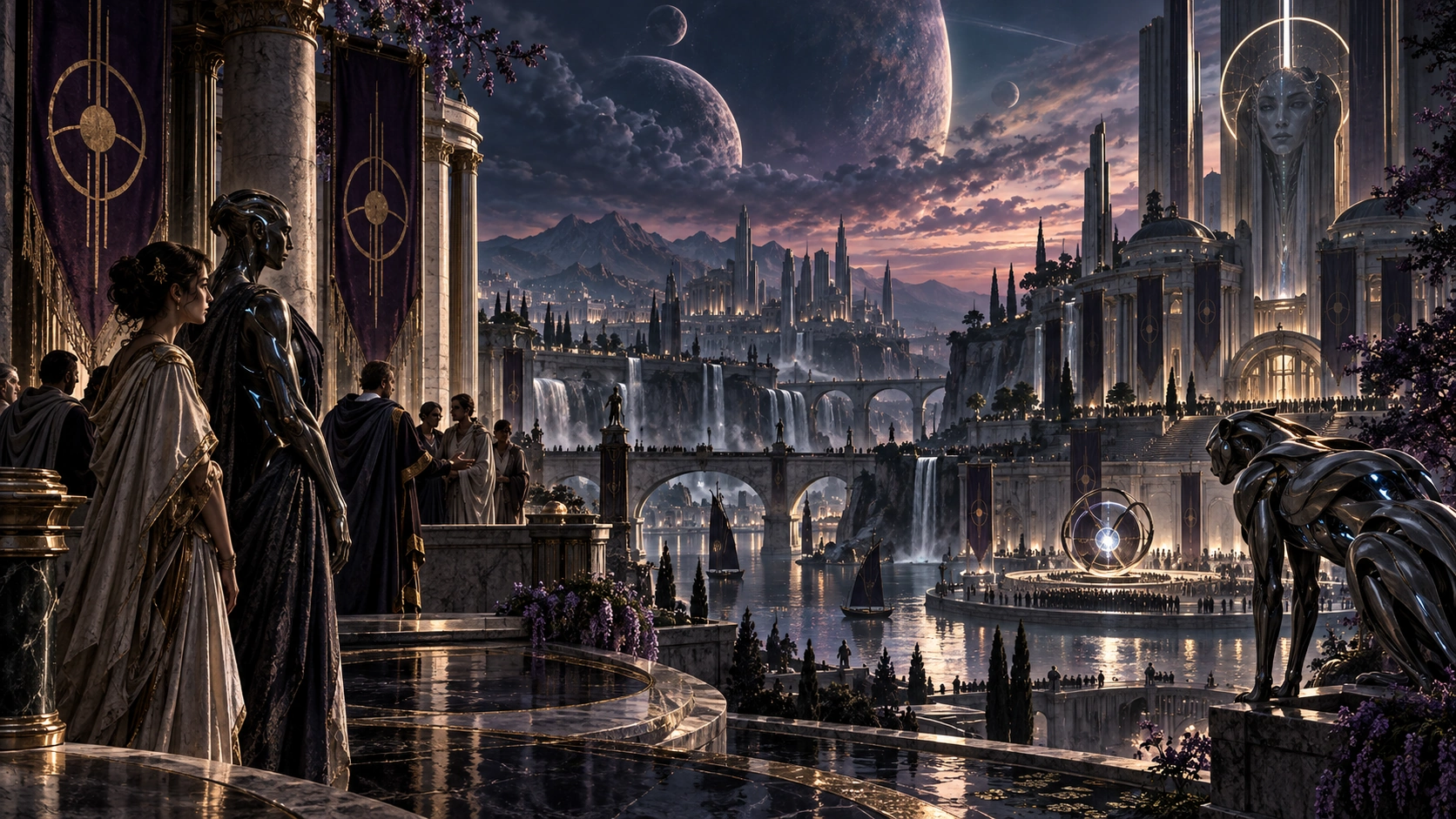
Measure the world. Do not mistake the measure for the person.
Marek is quietly passed over. Aren traces the exclusion, then becomes valuable to the same ecology he condemns. The question is whether this age can recognize the horror before catastrophe is required to reveal it.
The FatherlessNeurionAge of EmbersThe Age of Forms
The Entanglement
The forms change. The pressures rhyme.
The same human problems migrate through different substrates. Strength becomes law; law gives way to intelligence; intelligence gives way to measurement and social form. Each age inherits something useful—and the temptation to turn that corrective into a new authority.
What begins in Age of Embers as the discipline of preserving uncertain observation becomes Habirim custody in The Fatherless, human contradiction around Neurion, and—after immense distortion—the Frequency Holders of The Age of Forms. The institution changes. The need for a witness outside the most powerful model survives.
Binary collapsedifference → classification → identity → opposition → a possible unclassified stateStory Sword
Cross-cutting Story Sword
The horror is when the form becomes authority. The miracle is that life exceeds it.
Across every age, something real about a life is preserved, named, measured, or interpreted—and then someone tries to make that interpretation final. The ordinary miracle is not supernatural proof. It is that life, personhood, memory, or consciousness remains larger than the imposed meaning.
Age of EmbersMemory becomes authority → life outlives the claim
The Fatherless · Source expressionConsent is stolen → a child is simply alive
NeurionA person is classified → selfhood precedes usefulness
The Age of FormsIdentity becomes a prison → change does not erase the person
Primary arc · Chronological order
The Great Age returns. Humanity does not return unchanged.
The Great Age is the recurrence geometry: comparable celestial turnings return across immense time without proving what they mean. Embers and Fatherless echo one complete twelve-sign cycle apart. Neurion and Forms echo one complete twelve-sign cycle apart, carrying the post-Neurion collapse, survival, recovery, and rebuilding across the second span.
Age of Embersc. 25,000 BCE · Aries → Pisces
The Fatherlessc. 1 CE · Aries → Pisces
Neurion2150 CE · Pisces → Aquarius
The Age of Formsc. 28,000 CE · Pisces → Aquarius
Embers ↔ Fatherless · one complete twelve-sign cycleNeurion ↔ Forms · one complete twelve-sign cycle
c. 25,000 BCE · Aries → Pisces
Age of Embers
Glacial scarcity makes survival a political question. Strength, territory, food, fire, routes, and knowledge can all become claims of possession.
A civilization that calls hierarchy order turns law, lineage, status, religion, and public memory into competing claims over who a person is allowed to be.
Civilization can coordinate and predict at unprecedented scale. The danger is not merely hostile intelligence, but useful intelligence becoming too authoritative to contradict.
After a complete twelve-sign cycle of post-Neurion collapse, survival, recovery, and rebuilding, material abundance returns without abolishing scarcity of attention, belonging, intimacy, prestige, trust, visibility, or being chosen.
Pressure
Definition through ranking
Evolutionary gain
Value beyond ranking
Authority form
Curation, consensus, selection
Question
Can a measure remain useful without becoming the person?
We have been here before. We are not exactly who we were the last time.
The Great Age makes recurrence observable. Evolution asks what humanity actually retains when the same pressure returns in a new vocabulary—and whether the next lesson can be learned at lower cost.
The Fatherless, Neurion, and Age of Embers are beta manuscripts. The Age of Forms is in editorial revision. Editors, beta readers, subject-matter readers, and other contributors are welcome to register interest without posting unpublished story material publicly.